BearGorilla Case Study
A recruiter-readable case study covering scope, technical decisions, and performance outcomes from an Astro implementation.
Context → Role → Decisions → Outcomes
Context: Existing pages were content-heavy, slow to render, and weak in message hierarchy.
Role: Owned architecture, frontend implementation, and conversion-oriented technical SEO decisions.
Decisions: Rebuilt key pages in Astro, simplified content flow, and standardized reusable section patterns.
Outcomes: Faster interaction readiness, clearer navigation through the page, and stronger CTA visibility.
Technical Stack
- Astro
- TypeScript
- Tailwind CSS
- Component-driven page composition
- Technical SEO architecture
Performance Snapshot
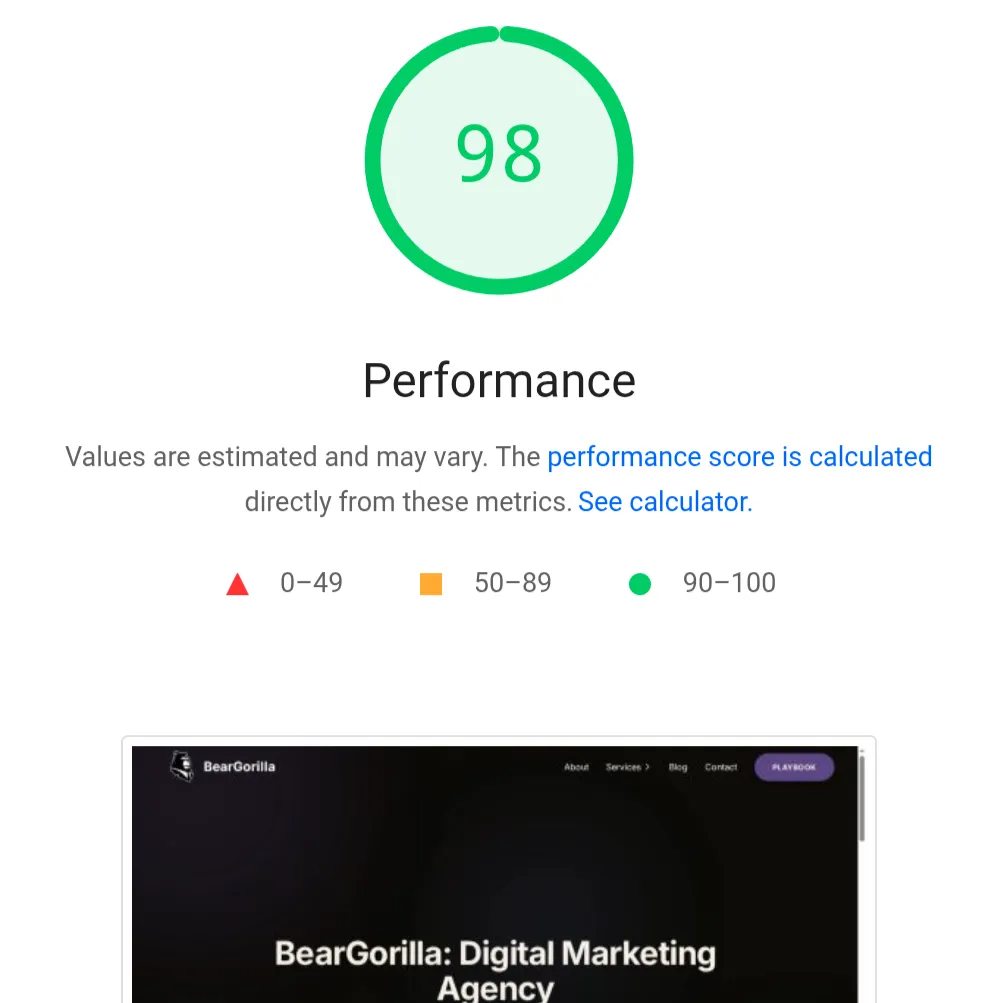
Measured Improvements
- 95+ Lighthouse performance score on key landing pages.
- Reduced JS payload through Astro-first rendering strategy.
- Improved Largest Contentful Paint by simplifying above-the-fold layout.
- Strengthened Core Web Vitals consistency across mobile templates.
Architecture + Conversion Strategy
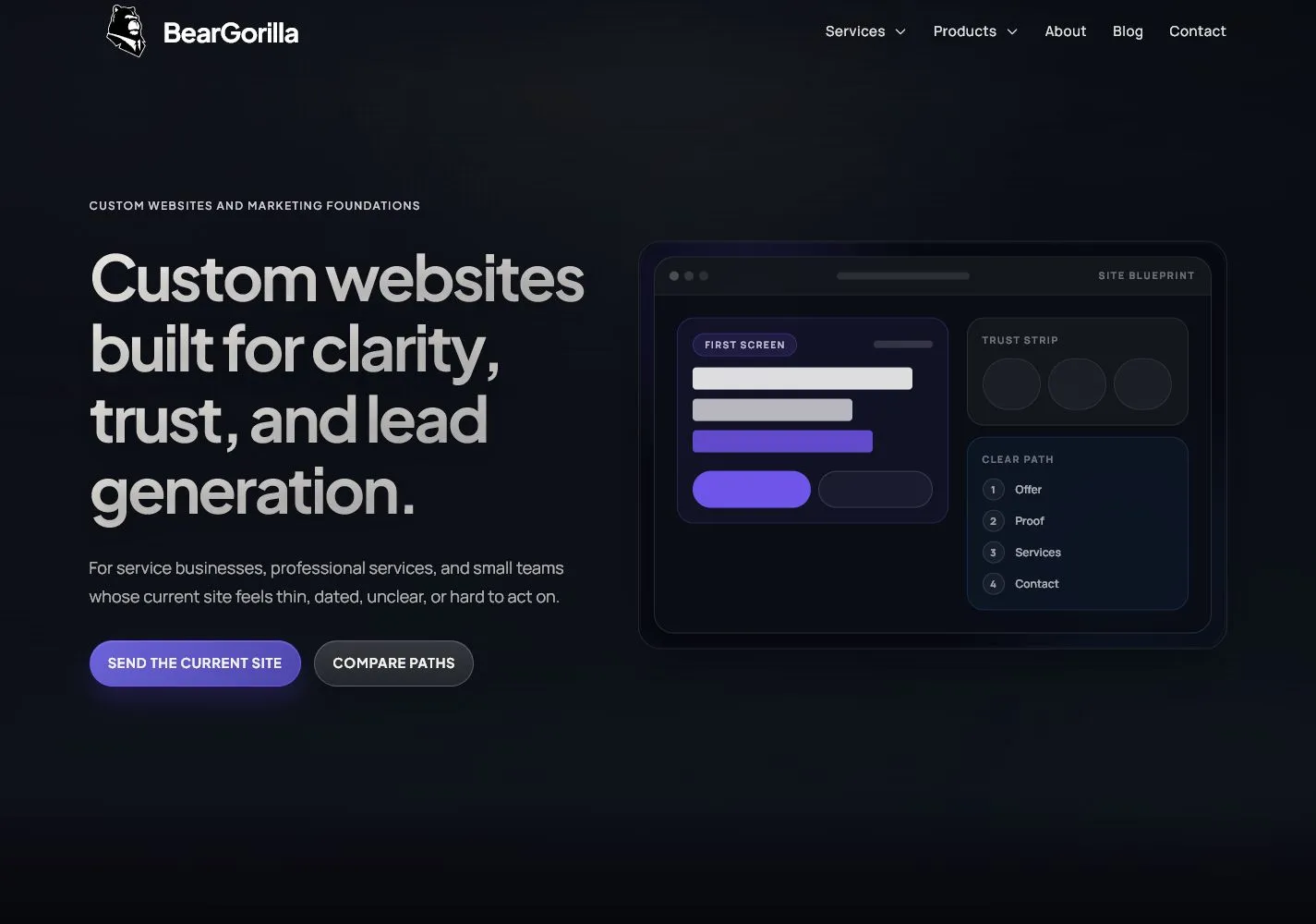
The architecture favored maintainability and speed: modular section components, clear data ownership, and predictable page composition for future iteration.
Conversion strategy centered on one clear CTA per page segment, reduced cognitive load in content blocks, and stronger trust signals near call-to-action areas.
What I’d Improve Next
- Add A/B test hooks for hero copy and CTA variants.
- Expand analytics events to map scroll-depth and form abandonment.
- Build a reusable schema generator for project and service pages.
- Add visual regression checks for key conversion templates.